
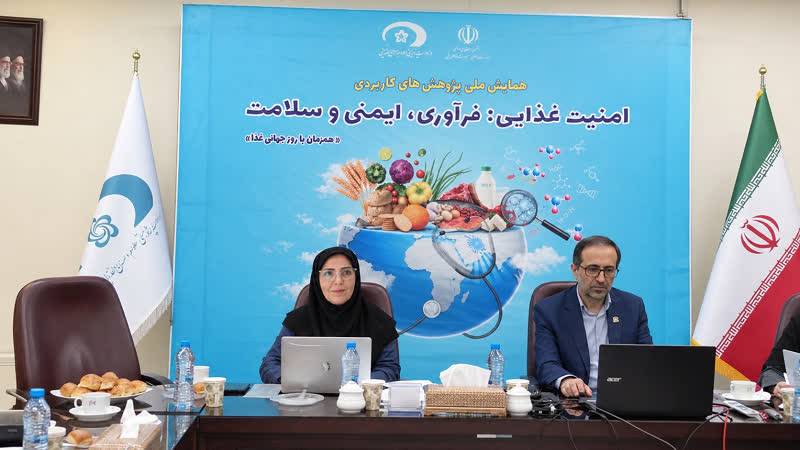
The Scientific Secretary of the 4th National Conference on Applied Research in Food Security: Processing, Safety and Health announced that the conference received 245 scientific papers, of which 186 were accepted for poster presentation, and featured 15 distinguished speakers. She also emphasized the role of applied research in enhancing food security, developing emerging technologies, and promoting public health.
Prof. Marzieh Hosseininezhad, the Scientific Secretary of the event, also noted that the paper submission process began on June 21 and continued until September 22, 2026. She added that the fourth edition of the conference was held on October 17, 2026, coinciding with World Food Day, with the aim of advancing specialized knowledge, facilitating the exchange of scientific achievements, and fostering effective links between research, industry, and policymaking in the food sector.
Emphasizing the need to draw on the country's scientific capacities to address challenges in the food sector, Hosseininezhad stated that, at a time when food security, consumer health, and the sustainability of the food supply chain are among the most pressing national and global concerns, the development of problem-oriented and applied research can play a decisive role in improving production processes, enhancing food quality and safety, reducing waste, and promoting public health.
Referring to the broad range of scientific themes covered by the event, the Scientific Secretary said that key topics included food security in times of crisis; novel food processing methods; nanotechnology, biotechnology, and microbiology; green technologies; innovative packaging; quality control; food waste reduction; and the application of artificial intelligence and modeling in the food industry.
She added that the scientific program also addressed functional and health-oriented foods; malnutrition and nutrition for patients with special dietary needs; rapid detection technologies for food toxins and contaminants; natural additives and preservatives; food authentication and combating food fraud; sensory evaluation; cognitive sciences; and standards, regulations, and policies related to food security.
Outlining the conference's speaking program, Hosseininezhad stated that three keynote speeches were delivered by Dr. Zand, Secretary of the Commission on Ethics in Agriculture and Food at the Ministry of Agriculture Jihad; Dr. Emami, Head of the Food Security Working Group at the Presidential Strategic Deputyship; and Dr. Kiani-Rad, Ambassador and Permanent Representative of the Islamic Republic of Iran to the Food and Agriculture Organization of the United Nations (FAO).
She continued that, in addition to these keynote speeches, 12 professors and experts from various universities across the country participated as featured speakers in the conference's scientific program, presenting their latest findings, expert perspectives, and scientific approaches to the challenges and opportunities facing food security and the food industry.
The Scientific Secretary of the 4th National Conference on Applied Research in Food Security also reported the virtual participation of approximately 250 key specialists in the food industry. She expressed hope that this professional engagement would help expand scientific interactions, facilitate the exchange of experience, and strengthen ties among researchers, academics, and food industry professionals.
Hosseininezhad concluded by expressing hope that the scientific outcomes of the conference would go beyond paper presentations and the exchange of expert views, contributing to the identification of the country's actual needs, the development of practical solutions to challenges facing the food industry, and the strengthening of joint cooperation among scientific institutions, executive bodies, and the industrial sector. She added that these outcomes could represent an effective step toward achieving sustainable food security, improving food safety, and safeguarding public health.