
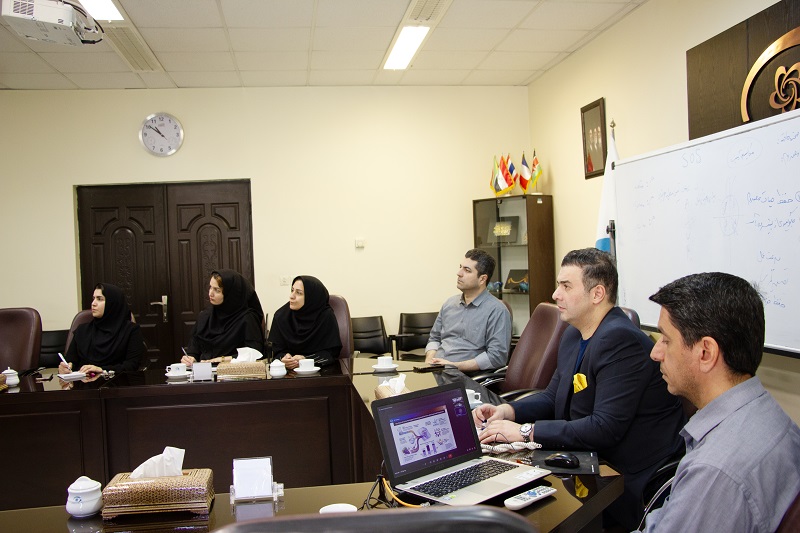
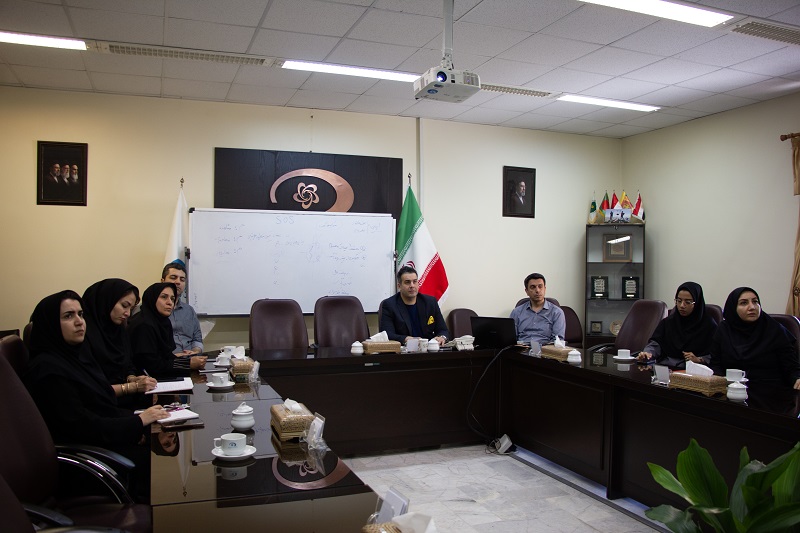
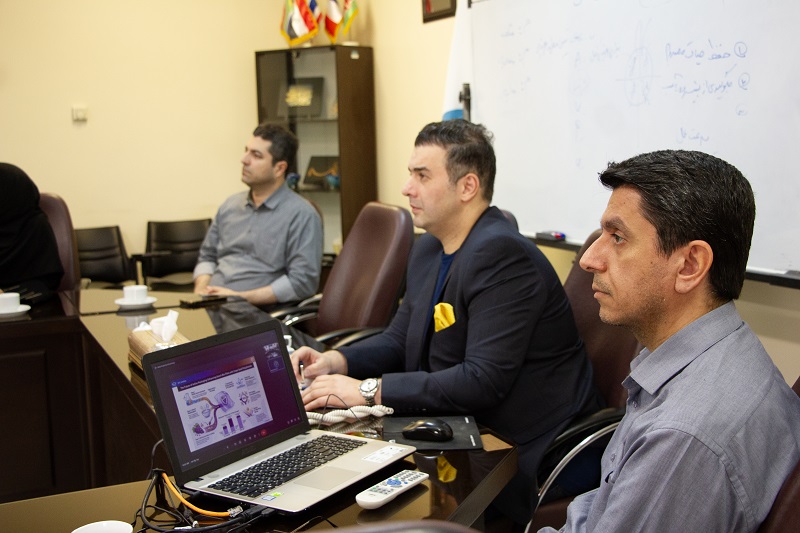
As part of its efforts to expand international scientific cooperation and enhance the specialized knowledge of food researchers, the Research Institute of Food Science and Technology organized an online scientific lecture entitled “Designing Biopolymer-Based Encapsulation, Lubrication, and Packaging Systems.” The event was attended by faculty members, researchers, and students of the Institute.
The online lecture was delivered by Dr. Khalid Gul, a faculty member at the National Institute of Technology Rourkela, India, and a member of the editorial board of the prestigious international journal Food Packaging and Shelf Life. During the session, the latest scientific approaches and emerging technologies in the fields of bio-based packaging, smart food preservation systems, and shelf-life enhancement technologies were presented and discussed.
At the beginning of his presentation, Dr. Gul introduced recent advances in encapsulation systems and explained their role in protecting bioactive compounds and enabling their controlled and targeted release. He noted that maintaining the stability of sensitive compounds such as antioxidants, vitamins, antimicrobial agents, and functional additives remains one of the major technological challenges in the food industry. According to Dr. Gul, encapsulation technologies can significantly improve the efficiency, safety, and quality of food products by protecting these compounds from environmental degradation.
Dr. Gul further discussed the role of biopolymers in the development of next-generation food packaging systems. He provided a scientific overview of the structure and functionality of active and intelligent packaging technologies and emphasized that the global packaging industry is increasingly moving toward biodegradable and environmentally friendly materials. These innovative technologies not only help reduce environmental impacts but also contribute to extending product shelf life and preserving food quality through improved control of moisture, oxygen, antimicrobial compounds, and storage conditions.
Another key focus of the lecture was the practical application of these technologies in the food industry. Addressing the global challenge of food waste, Dr. Gul highlighted the development of bio-based packaging systems as an effective strategy for reducing waste, extending product shelf life, improving food safety, and supporting sustainable development goals.
He also outlined emerging research trends and future directions in advanced packaging technologies, while discussing research opportunities available to scientists and industry stakeholders working in this field.
On the sidelines of the event, the Public Relations Office of the Research Institute of Food Science and Technology conducted an interview with Dr. Behrouz Ghorani, Director of the Institute’s Office of Scientific and International Cooperation, to explore the practical and strategic significance of the topics discussed during the lecture.
Commenting on the importance of such scientific programs, Dr. Ghorani stated:
“Bio-based packaging and smart food systems represent strategic and future-oriented areas within the global food industry. Continuous scientific engagement with leading international scholars and researchers provides valuable opportunities for knowledge exchange, the development of research collaborations, and the adoption of innovative technologies.”
He further added:
“One of the primary objectives of the Office of International Scientific Cooperation is to facilitate effective interaction between domestic researchers and distinguished scientists worldwide. Such collaborations not only contribute to enhancing researchers’ scientific capabilities but also provide a foundation for technology development, joint research projects, and addressing the evolving needs of the food industry.”